Six Unexpected Food History Facts That Are Rarely Taught

We tend to think of our favorite foods as timeless. Recipes passed down through generations, ingredients rooted in ancient tradition, flavors that have always been exactly as they are. But the truth is often stranger, and far more entertaining, than any origin story a marketing team could invent. From medicinal ketchup to politically motivated carrots, the history of what we eat is full of twists that would make a novelist jealous. Here are six food facts that will make you question everything in your pantryCotton Candy Was Co-Invented by a Dentist

It seems almost too perfect to be true. The machine that spins sugar into fluffy clouds of cotton candy was co-invented by a dentist. In 1897, Dr. William Morrison partnered with a candy maker to create “Fairy Floss” and introduced it at the 1904 World’s Fair. It was a massive hit, selling over 68,000 boxes to delighted fairgoers.
Whether Morrison was looking for new patients or just loved the sweet treat is unclear. Either way, his invention remains a carnival staple more than a century later. It’s a delicious reminder that food history is full of unexpected contradictions.
Lobsters Were Once “The Cockroaches of the Sea”
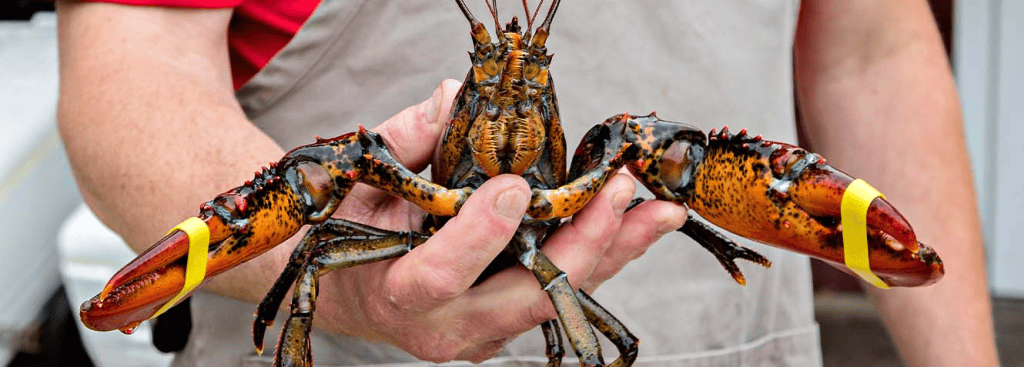
It’s hard to imagine now, but there was a time when lobster was considered beneath contempt. In the 1700s, these crustaceans were so plentiful that they washed up on beaches in rotting piles. They were fed to prisoners, servants, and indentured laborers, who eventually protested being forced to eat them so often. Some colonies even passed laws limiting how many times a week inmates could be served lobster. It was viewed as bottom-feeding trash, fit only for the desperate.
Then came the railroads. Train managers, looking for cheap meals to serve unsuspecting passengers, offered lobster to inland travelers who had never seen it before. Those diners had no idea they were eating “sea bugs,” and they loved it. By the time the truth emerged, it was too late. Lobster’s reputation had been permanently upgraded from prison food to luxury delicacy.
Ketchup Was Originally a 19th-Century Medicine
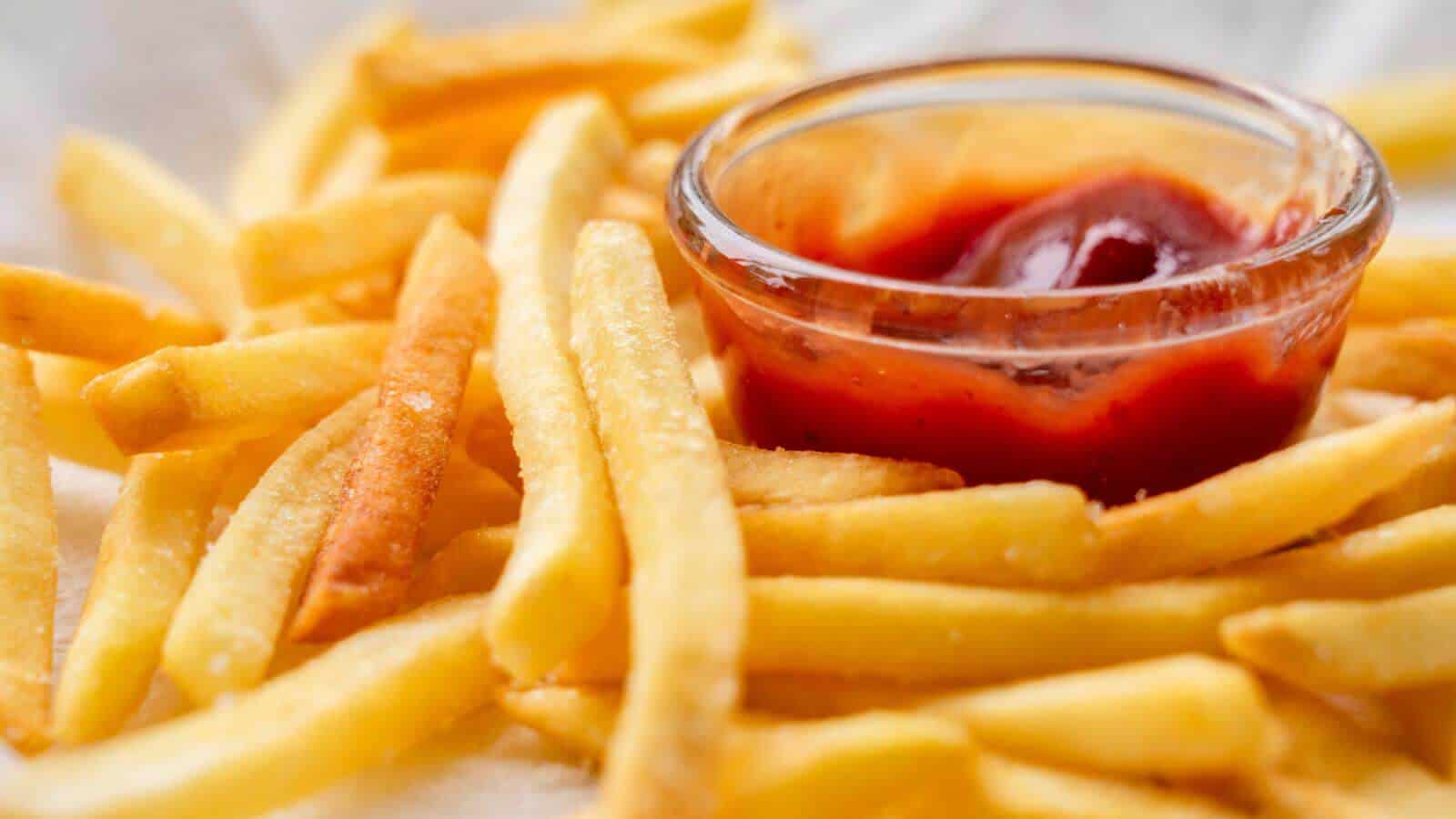
Before it became the essential burger topping, ketchup was sold as a patent medicine. In the 1830s, a doctor named John Cook Bennett began promoting tomatoes as a cure-all for stomach ailments like diarrhea and indigestion. He even had the sauce concentrated into “tomato pills” sold in pharmacies across the country. The medical craze caught on, and for nearly a decade, people genuinely believed ketchup could heal them.
Eventually, the tomato pill market collapsed. People realized that while tomatoes are healthy, they aren’t magical. It took another fifty years for the sauce to be rebranded as a condiment, stripped of its medicinal claims. Now we enjoy it purely for taste, not digestion.
Carrots Weren’t Always Orange (It Was a Political Statement)
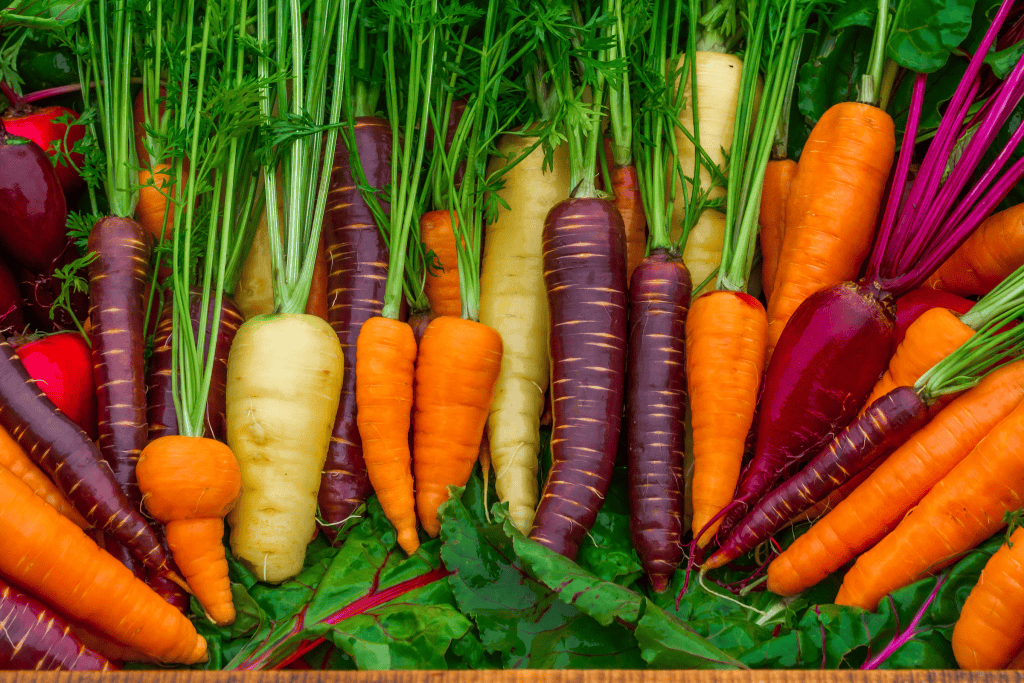
The bright orange carrot is so ubiquitous that it’s hard to imagine it any other way. But wild carrots were originally purple, yellow, or white. The orange variety only became dominant in the 17th century, thanks to Dutch farmers with a political agenda. Legend has it they bred carrots specifically to honor William of Orange during the Dutch struggle for independence.
By stabilizing the orange color, they created a living tribute to their royal house. The new variety also turned out to be sweeter and hardier than its predecessors, sealing its place in history. A political gardening project ended up shaping produce aisles around the world.
Graham Crackers Were Invented to Stop “Sinful” Desires

Sylvester Graham, the minister who invented the Graham cracker, had a very specific mission. He believed that rich, flavorful foods led young people to have “unhealthy” lustful thoughts. His solution was a bland, high-fiber biscuit made from unrefined flour, designed to suppress physical desires. He genuinely thought a boring diet would lead to a more moral society.
The irony is delicious. Graham’s anti-flavor creation is now the foundation for s’mores, the ultimate sugary, indulgent campfire treat. The man who tried to banish pleasure accidentally created one of our most beloved desserts. It’s a perfect example of a health food failing its original mission.
The “Five Second Rule” Was Actually Tested by NASA

Most of us grew up with the five-second rule, that comforting belief that food dropped on the floor is safe if picked up quickly. It turns out scientists have actually studied this. Researchers associated with NASA and major universities have run experiments on bacteria transfer rates, and their findings are sobering. Bacteria can attach to dropped food in less than one second.
The rule provides a false sense of security. However, the type of surface matters more than the time spent on the ground. Carpet transfers fewer bacteria than tile, simply because there’s less surface contact. So next time you drop something, maybe hope it lands on the rug.
These stories remind us that the foods we take for granted have strange, winding histories. They’ve been medicine, propaganda, and social experiments. The next time you reach for a carrot or squeeze ketchup onto a burger, you’ll know there’s more to it than meets the eye.