Why Costco’s Recent Checkout Changes Are Causing Customer Complaints

Costco’s latest checkout push is meant to solve one of the warehouse chain’s oldest irritations: the long, slow crawl from cart to exit. Anyone who has ever navigated a packed Saturday afternoon knows the feeling. You’ve wrestled a 40-pack of paper towels through crowded aisles, waited your turn at the register, and then faced the final bottleneck at the exit door. The company has tested app-based Scan & Go, leaned harder into pre-scan technology, and said newer pay stations can process pre-scanned orders in about eight seconds. On paper, that sounds like genuine relief. In practice, the reaction has been deeply split. For many members, the friction was never just about waiting. It was about trust, routine, and whether a store built on simplicity is now asking shoppers to do more of the work themselves while calling it progress. That tension is driving the backlash you’re hearing from longtime members.
Members Feel Like They Are Being Asked To Do More
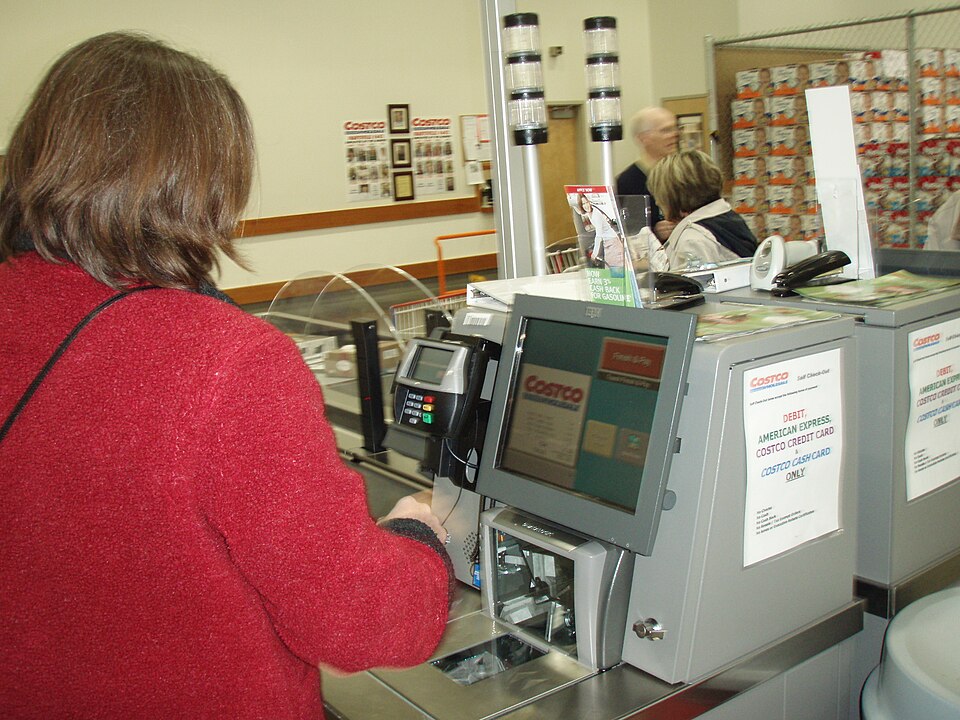
Another sore point is philosophical. Costco built its entire reputation on low prices, quick trust, and a no-nonsense shopping rhythm that felt honest and straightforward. Scan & Go is designed to cut lines, but it also quietly shifts part of the cashier’s job onto the member. Every barcode has to be caught, every item has to be checked in the app, and the burden of getting it right moves closer to the shopper instead of staying with the store. That trade can feel backward to members who already pay an annual fee just to walk in the door. In their eyes, speed is welcome, but not when it comes with a quiet expectation that customers should self-manage more of the process than before. There’s a difference between convenience and asking shoppers to become unpaid employees, and this rollout is blurring that line for a lot of people.
The Exit Still Feels Like One More Hurdle
Some of the backlash comes from the fact that the promised shortcut still ends with another checkpoint, not a clean escape out the door. Under the pilot, members scan and pay through the Costco app, then show a QR code at the exit for verification. That is certainly cleaner than unloading an entire cart onto a conveyor belt at a register, but it does not fully erase the feeling of being processed one more time before finally getting out. For shoppers already tired of card scans, receipt checks, and crowded front ends, the new system can look like one bottleneck swapped for a different one. The technology may be faster on paper, yet the emotional texture can still feel repetitive, supervised, and just slightly intrusive for many people. You’re still being stopped, still being checked, still waiting for permission to leave.
App Dependency Leaves Some Members Behind

The first complaint is simple: a faster lane should not require a newer phone, a charged battery, and complete comfort with mobile apps for a paid membership. Costco’s pilot asks members to scan items directly in the app, pay through the app, and then present a QR code at the exit for verification. That may feel effortless to regular digital shoppers who are already comfortable managing their lives through smartphones, but it turns a basic store errand into a phone-centered process for everyone else. For older members, less tech-confident shoppers, or anyone who treats Costco as a straightforward in-and-out trip, the change can read less like convenience and more like exclusion dressed up as efficiency. When you’re already paying an annual fee just to walk through the door, being told you need the right device and the right app to get the full benefit stings. That is exactly where irritation starts.
The Move Feels Late, Not Fresh

There’s also a pride issue baked into the reaction. Costco members are not oblivious to what other stores have been doing. Sam’s Club has long leaned on Scan & Go, refining it over years, and BJ’s has offered ExpressPay through its app for quite some time. So when Costco finally pilots its own version, some members do not read it as innovation at all. They read it as a catch-up move from a company that let a convenience gap linger too long without addressing it. That matters because late upgrades are always judged more harshly. When a retailer arrives after the category has already moved, customers are less patient with rough edges, unclear rollouts, and the sense that they waited years for something rivals normalized long ago. It stops feeling like progress and starts feeling like playing catch-up.
Shoppers Do Not Trust Tech To Be Smooth Every Time

Even members who are genuinely open to the change still worry about what happens when the technology behaves like technology. A phone checkout flow adds new failure points that simply don’t exist with a human cashier: weak signal in a crowded warehouse, app hiccups, dead batteries, missed scans, payment freezes, or confusion at the exit code stage. Costco says early results are positive, but customers know from experience that one glitch at a packed warehouse can sour the entire front-end experience in seconds. That fear lands harder at Costco because carts are bigger, stores are busier, and the margin for small mistakes feels thinner than at a regular grocery store. A digital shortcut only wins trust when it works invisibly, every single trip, not just on a pilot’s best day when everything lines up.
An Uneven Rollout Makes The Benefit Feel Inconsistent
The last source of frustration is pure uncertainty. Costco has not given a clear national rollout timeline for Scan & Go, leaving members in the dark about when or if their local warehouse will get the upgrade. That leaves shoppers in an awkward middle ground where some warehouses test faster checkout while others still rely on crowded lines or older self-checkout setups that everyone already has complaints about. A convenience upgrade feels significantly less exciting when it lands like a patchwork test instead of a dependable standard that you can count on. For a paid membership model, consistency matters almost as much as savings. Members do not just compare Costco with its own past. They compare one warehouse with another down the road, and that uneven experience is exactly where annoyance hardens into genuine backlash.