10 of the World’s Most Expensive Foods and Why They Cost So Much

Luxury food transcends flavor; it is an experience defined by scarcity, human artistry, and narrative. Across the globe, a select few ingredients command breathtaking prices, not merely for their taste but for the incredible challenges of their cultivation, harvest, and sourcing. These are delicacies shaped by nature’s strict limits, generations of craftsmanship, and a cultural prestige that elevates a meal into a memorable event. Whether nurtured for decades in the deep sea, painstakingly gathered from treacherous cliffs, or coaxed from the earth only under perfect conditions, each offers a unique story of how rarity and human effort create unparalleled culinary value. Here are ten of the world’s most extraordinary and expensive foods, and the fascinating reasons behind their worth.
Real Vanilla: The Labor of Love from a Finicky Orchid

Behind every fragrant, plump vanilla bean lies a story of relentless human attention. The vanilla orchid blooms for one single day, and on that day, each flower must be hand-pollinated within a narrow morning window—a technique discovered only in the 19th century. After the green pods are harvested, they undergo a months-long curing process of drying, sweating, and resting to develop their complex flavor. Grown primarily in Madagascar and other regions vulnerable to climate extremes, the crop is as economically precarious as it is labor-intensive. When you scrape the seeds from a real vanilla bean, you are using a product that embodies months of precise, fragile work, making it worth far more than any synthetic substitute.
Saffron: The Painstaking Threads of “Red Gold”

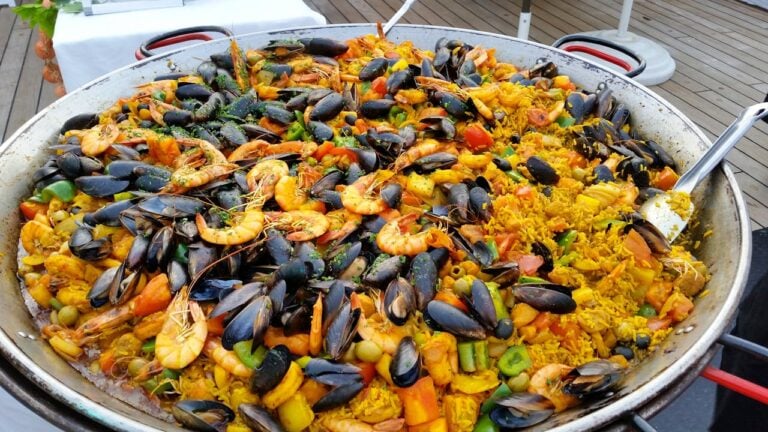
Earning its nickname as “red gold,” saffron’s value is woven from pure human labor. This coveted spice consists solely of the delicate stigmas plucked from the Crocus sativus flower. Each bloom yields only three fragile threads, which must be harvested by hand at dawn to preserve their quality. Producing a single pound requires the manual collection from approximately 75,000 flowers, an astonishing feat of patience and precision. The result is a spice that imparts a radiant golden hue and a complex, floral-honey essence to dishes from Spanish paella to Persian rice. Its staggering price—often over $5,000 per kilogram—is a direct reflection of the immense care contained in every precious gram.
Moose Cheese: The Incredibly Rare Dairy from Sweden’s Gentle Giants

From a single farm in Sweden, Älgens Hus, comes perhaps the world’s rarest cheese—made not from cow or goat milk, but from moose. The production is an exercise in extreme patience, as only three moose cows provide milk, and each can be milked for just a few months each year. The animals are sensitive and milked voluntarily, making the process slow and delicate. The resulting cheese is rich, creamy, and slightly gamey, with a unique flavor profile. With an annual output of only about 300 kilograms and a price tag around $1,000 per kilo, moose cheese is a spectacular culinary oddity, representing a remarkable intersection of animal husbandry, scarcity, and artisan passion.
Kobe Beef: The Art of Japanese Marbling Perfection

Kobe beef represents the pinnacle of culinary dedication to an animal’s life. Hailing from Japan’s Hyogo Prefecture, it comes from Tajima-gyu cattle raised under some of the world’s most stringent protocols. To earn the revered Kobe designation, each cow must possess verified lineage, meet exceptional standards of fat marbling (known as shimofuri), and be nurtured on a specialized diet that includes beer mash and gentle massage. This meticulous husbandry results in meat with an unparalleled texture—butter-tender and richly flavored with a sweet, umami depth. The limited supply and global prestige mean that enjoying a true Kobe steak is a rare, opulent experience, often commanding several hundred dollars for a single serving.
Almas Caviar: The “Diamond” Eggs of the Ancient Sturgeon

Almas caviar is the ultimate symbol of edible extravagance, a product of time and rarity. Sourced from the eggs of the exceptionally rare, albino beluga sturgeon in the Caspian Sea, these pale, gleaming pearls come from fish that can take a century to mature. The name “Almas” means diamond in Russian, an apt comparison for a delicacy often presented in 24-karat gold tins. Its flavor is remarkably delicate and clean, with subtle nutty notes that distinguish it from other caviars. With prices soaring beyond $30,000 per kilogram, Almas is less a food and more a luxurious artifact, representing nature’s slow patience and the height of gastronomic indulgence.
Yubari King Melon: Japan’s Perfectly Cultivated Gift of Sweetness

In Japan, the Yubari King melon is less a fruit and more a sculptural masterpiece of agriculture. Grown exclusively in greenhouses in Hokkaido, each vine is meticulously pruned to bear only a single, perfect fruit. Farmers monitor sugar content, netting pattern, and shape with obsessive care, ensuring every melon achieves flawless symmetry, an impossibly smooth rind, and an exquisitely balanced sweetness. These melons are central to Japan’s culture of prestigious gift-giving (omiyage), where they convey deep respect and honor. At auction, prized pairs have sold for over $20,000, a price that reflects not just the taste, but the immense craftsmanship and cultural significance contained within each globe.
Bluefin Tuna: The Ocean’s Prized, Precarious Treasure

The bluefin tuna, particularly the Pacific and Southern varieties, is a monarch of the sea whose rich, fatty flesh commands royal sums. Prized in Japan for the ultimate toro (fatty belly) sashimi and sushi, its flavor is a deep, savory umami unmatched by other fish. Its staggering value—with record-breaking specimens selling at Tokyo’s Tsukiji market for over $3 million—is driven by immense demand and critical scarcity due to decades of overfishing. Consuming a slice of premium bluefin is thus a complex luxury, intertwining culinary delight with global environmental and conservation debates, making each bite a taste of the ocean’s most coveted and contested resource.
The Elusive Underground Gold: White Truffles of Alba, Italy

Prized above nearly all other ingredients, the white truffle is a fragrant testament to nature’s hidden mysteries. Found exclusively in the forests of Northern Italy, these rare fungi grow entwined with the roots of specific trees and defy all attempts at cultivation. Their harvest relies on the keen noses of specially trained dogs and the secret knowledge of seasoned hunters, with a short, unpredictable season that sends prices soaring into the thousands per pound. More than just a spice, a truffle’s intense, earthy aroma has the power to transform the simplest dish—like pasta or scrambled eggs—into a profound luxury, making each shaving a celebration of fleeting, wild perfection.
Bird’s Nest Soup: The Perilous Harvest of Swiftlet Saliva

A cornerstone of Chinese haute cuisine and traditional medicine, bird’s nest soup is made from the solidified saliva nests of cave-dwelling swiftlets. Harvesting these nests is a centuries-old, dangerous profession, requiring collectors to scale immense, precarious cave walls in Southeast Asia. Once collected, the nests undergo a laborious cleaning process to remove feathers and debris before being slowly double-boiled into a delicate, slightly sweet gelatinous soup. Revered for its purported health benefits, including promoting skin vitality and longevity, a bowl of authentic soup can cost hundreds of dollars, paying for the perilous human effort and rare natural material that defines this unique delicacy.
Matsutake Mushrooms: The Untamable Scent of the Autumn Forest

The matsutake mushroom is a fragrant ghost of the forest, a wild ingredient that resists all domestication. It grows in a symbiotic relationship with the roots of specific red pine trees, and its appearance is notoriously unpredictable, dwindling as pine forests decline. For the Japanese, its distinct spicy, cinnamon-pine aroma is the quintessential scent of autumn, enjoyed in simple grilled preparations or elegant rice dishes. Its complete dependence on wild, healthy ecosystems and short seasonal window makes top-grade matsutakes incredibly scarce, with prices regularly exceeding $1,000 per pound. To savor them is to taste the pure, untamed essence of the forest itself.