American Foodss You Won’t Find on European Store Shelves

American food companies are finally starting to catch up with the rest of the world when it comes to removing questionable additives from their products. The European Union has had strict regulations on food dyes and other potentially harmful ingredients for years, which is why you’ll often find that American snacks sold overseas have completely different formulations. Some products have been banned outright, while others were quietly reformulated to meet stricter standards. As the FDA works toward phasing out certain artificial dyes by the end of 2026, the U.S. is slowly moving in the right direction. But right now, there are still plenty of popular American snacks that aren’t allowed in Europe. Here are five of them.
Honey Bunches of Oats
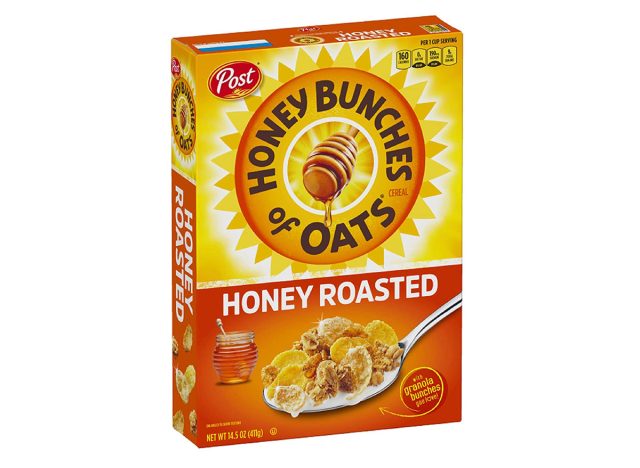
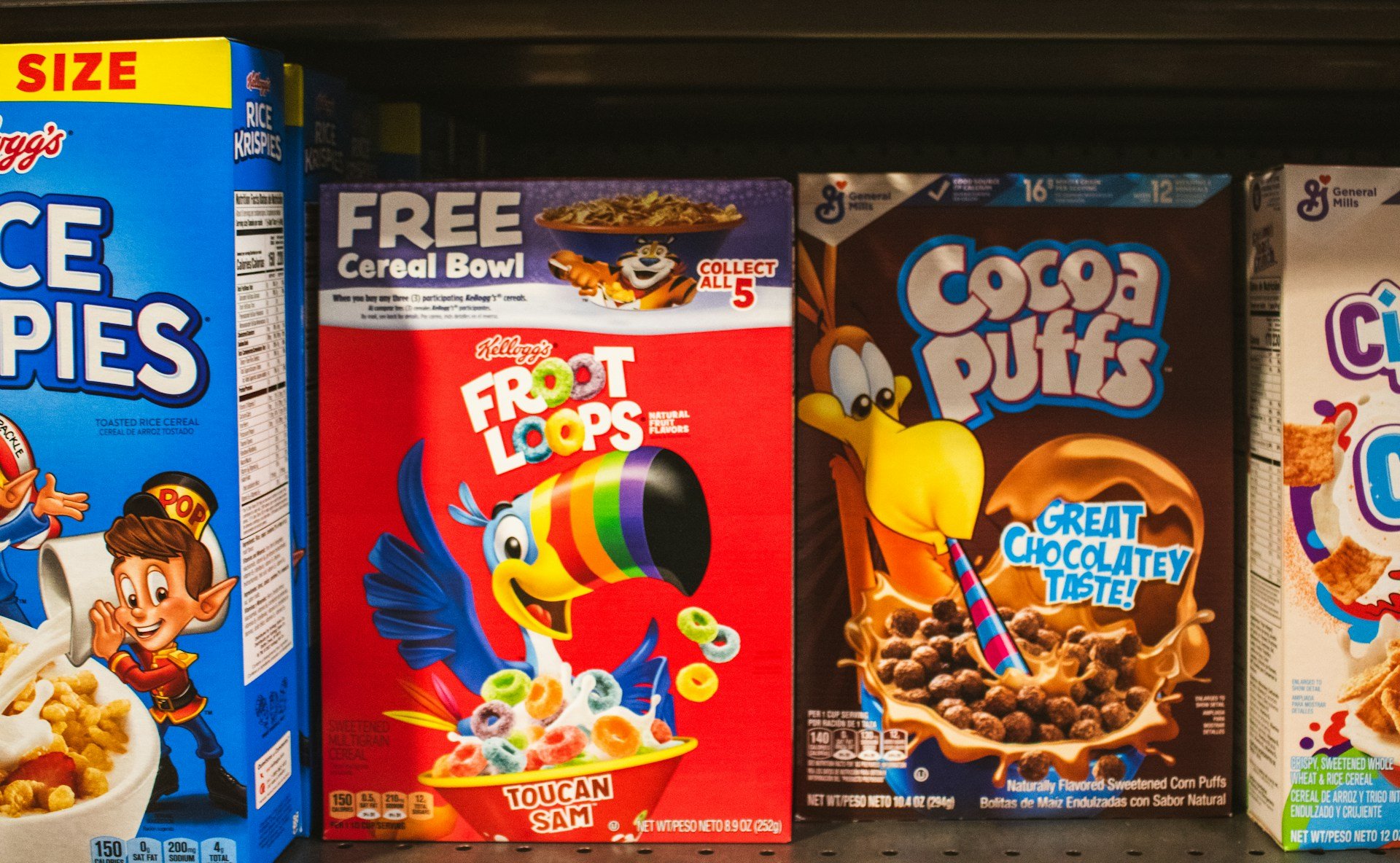
Honey Bunches of Oats, along with Rice Krispies, contain butylated hydroxytoluene, or BHT, a flavor enhancer that’s banned in the European Union and Japan. BHT is used to preserve fats and oils and extend shelf life, but its safety has been questioned for decades. According to the Environmental Working Group, while BHT isn’t classified as a human carcinogen, evidence from the American Conference of Governmental Industrial Hygienists suggests it’s a human respiratory irritant. It’s one of those ingredients that has flown under the radar for years, but as consumers become more educated about what’s actually in their food, the pressure to remove it continues to grow.
Lucky Charms
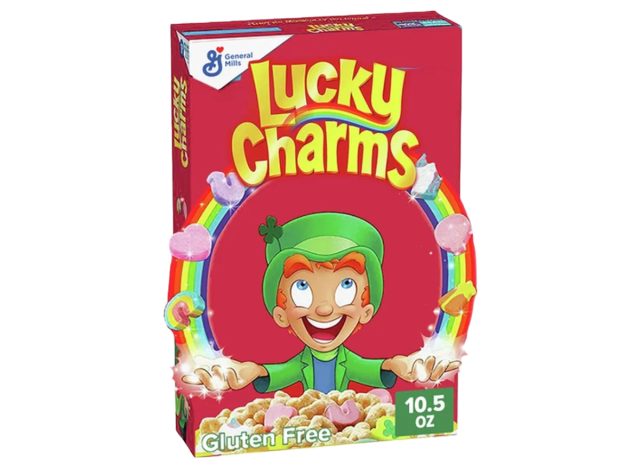
Those colorful marshmallows that make Lucky Charms so iconic are exactly why this cereal runs into trouble overseas. The bright marshmallow shapes get their vibrant hues from artificial dyes Red 40, Yellow 5, and Yellow 6, which are banned in countries like Norway and Austria. The European Union has much stricter standards when it comes to synthetic food colorings, and these particular dyes have been linked to behavioral issues in children and other health concerns. With the FDA now working on phasing out Red 40, Yellow 5, Yellow 6, Blue 1, and Blue 2 by the end of 2026, we might finally see American versions of this cereal moving toward cleaner ingredients. It’s about time.
Skittles
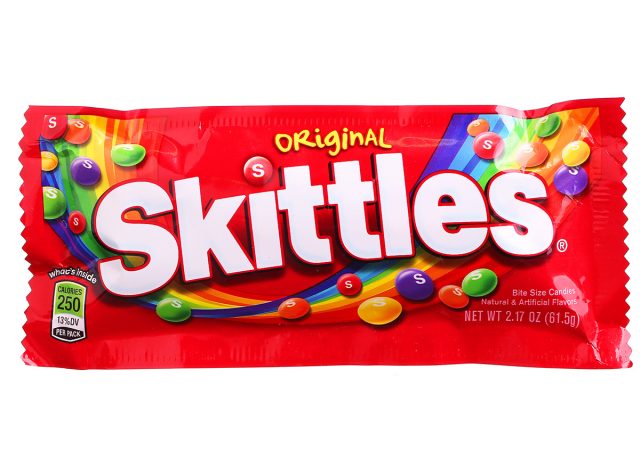
Skittles have a complicated history when it comes to international regulations. In Europe, the candy was reformulated to remove titanium dioxide, a color additive and whitener that was officially banned in the European Union back in 2022. Health groups had been raising concerns about the potential dangers of this ingredient for years, pointing to studies that raised questions about its safety. After decades of campaigning and mounting pressure, Mars finally removed titanium dioxide from Skittles sold in America as well. It’s a reminder that change often happens slowly, but persistent advocacy can actually move the needle.
Little Debbie Swiss Rolls
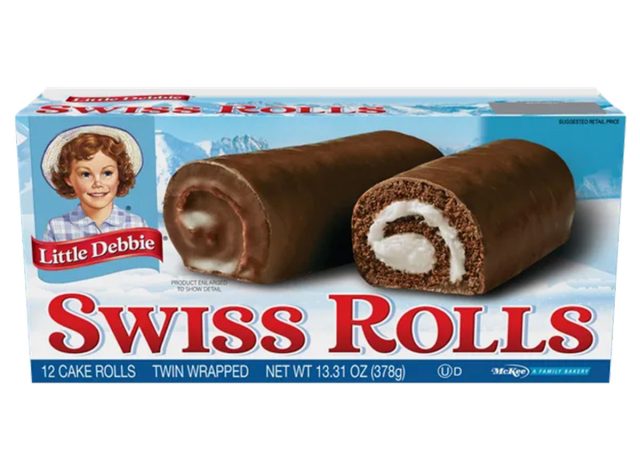
Little Debbie Swiss Rolls are a nostalgic favorite for many Americans, but they won’t be showing up on store shelves in Norway or Austria anytime soon. The problem comes down to those artificial dyes Yellow 5 and Red 40, which give the cakes their signature look but also raise public health concerns. According to Elizabeth W. Barnhardt, DO, MA via Ohio State Health, food dyes aren’t just a cosmetic issue. Even children and young adults without existing mental health conditions can become agitated after consuming food dyes. The behavioral impacts are real and documented, which is why other countries have taken a much harder stance on these additives.
Nestle’s Drumsticks
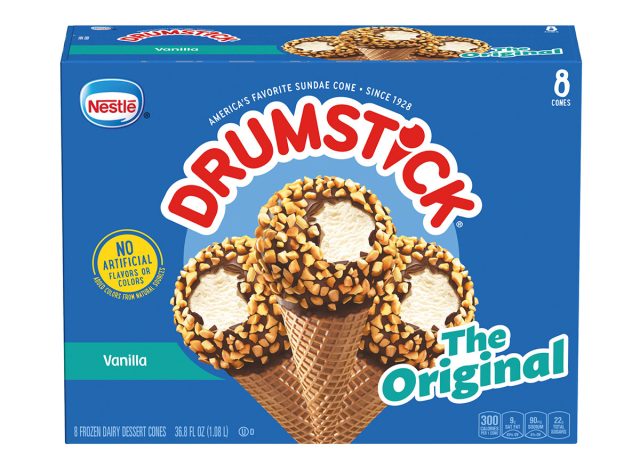
Nestle’s Drumstick ice cream cones are banned in Europe because they contain carrageenan, a thickening agent derived from seaweed. While it sounds natural enough, carrageenan has been linked to digestive inflammation and other health concerns, leading the EU to take a cautious approach. On a personal note, this additive is a major pet peeve of mine, especially when it shows up in heavy cream. There is absolutely zero need for it, yet you’ll find it in plenty of products, including some that are labeled organic. Always check the label, because even seemingly simple ingredients often contain unnecessary additives.