Classic 1950s Housewife Dishes That Wouldn’t Be Served Now

You have to understand, the 1950s was a different world. After years of wartime rationing, American kitchens suddenly had access to all these miraculous new ingredients—canned soups, powdered gelatin, instant everything. Housewives embraced them with enthusiasm, convinced they were living in the future. And sure, convenience was great. But somewhere along the way, things got weird. Really weird. Recipes prioritized how something looked on the table over whether it actually tasted good. Looking back now, these dishes are pure kitschy nostalgia. But if you served them to a chef today? They’d probably hand in their apron on the spot. Here are six mid-century “delicacies” that belong firmly in the past.
Canned Pear and Mayo Salad

This was the ultimate quick side dish for busy housewives who didn’t have time for complicated gelatin molds. It couldn’t be simpler: a canned pear half, placed face-up on a bed of iceberg lettuce. Then a generous scoop of mayonnaise right in the center, where the seeds used to be. To finish? A sprinkle of shredded cheddar cheese or a single cherry on top. The combination of slimy, sweet pear with rich, tangy mayo is something modern palates just can’t reconcile. It captures the 1950s obsession with putting mayonnaise on absolutely everything, no questions asked.
The Notorious Lime Cheese Salad
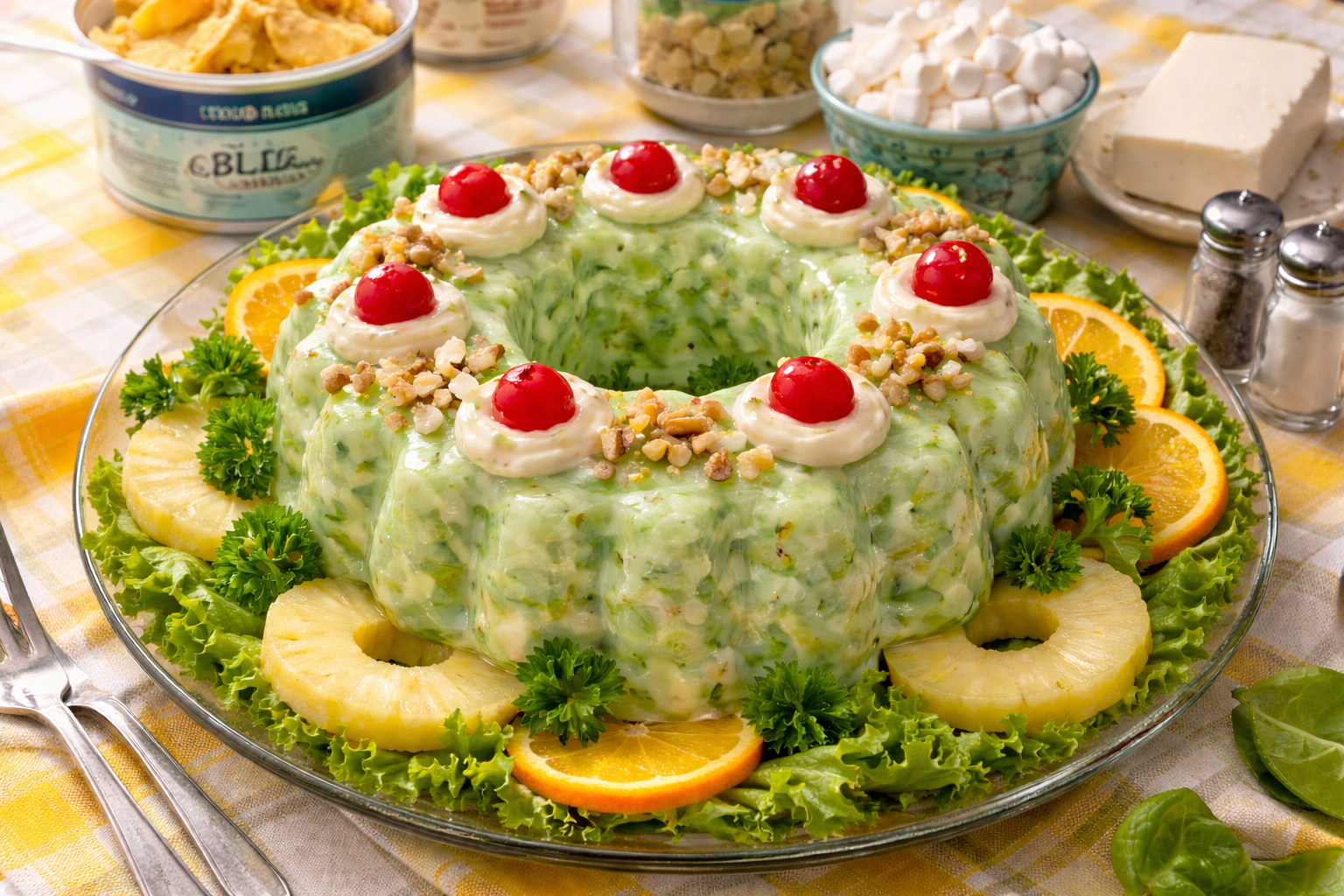
In the 1950s, the word “salad” meant something completely different. This party favorite started with lime Jell-O as the base—already a choice—and then things got interesting. Cottage cheese and mayonnaise got folded in, because apparently that made sense. For texture, housewives would add chopped celery, walnuts, and sometimes even canned pineapple. The result was this wobbly, neon-green tower that somehow tasted both sweet and sour at the same time. Today, the idea of mixing citrus gelatin with savory cheese is a sensory nightmare. But back in 1954? That shimmering mold was the height of suburban sophistication, the star of every bridge club gathering.
Banana Candles (The Fruit Centerpiece)

This might be the most visually baffling creation to come out of the mid-century kitchen. Picture this: a peeled banana stuck upright into a ring of canned pineapple. Then, to really sell the effect, a generous dollop of mayonnaise is drizzled down the side to look like melting wax. And at the very tip? A maraschino cherry, pinned in place to represent the flame. It was meant to be a fun, healthy treat for kids. The intention was sweet. The execution? Accidentally hilarious. No modern culinary school would ever let this near a kitchen. It’s a perfect time capsule of an era when presentation followed its own bizarre rules.
Ham Mousse with Savory Gelatin

If a 1950s housewife wanted to get fancy, she reached for a can of ham and some unflavored gelatin. Ham mousse was exactly what it sounds like—ground ham blended with heavy cream, mustard, and gelatin until it formed a smooth paste. Then it got poured into a decorative mold, often shaped like a fish or a heart, and left to set. When it was time to serve, you’d turn it out onto a platter and probably add more mayonnaise on the side. The idea of cold, gelatinous meat paste is enough to make most modern chefs shudder. But back then, it was considered clever entertaining—a way to stretch a little meat into something that fed a crowd.
Hot Dr Pepper with Lemon

Before fancy hot cocktails and artisanal winter warmers, there was boiled Dr Pepper. Families would heat the soda in a saucepan until it was piping hot, then serve it with a thick slice of lemon. The marketing pitched it as a “refreshing winter warmer” that would give you a quick energy boost. But here’s the thing—boiling soda kills all the carbonation. You’re left with flat, intensely syrupy sweet liquid, with lemon trying desperately to cut through it. Modern baristas would run screaming. And yet, it still has a few devoted fans today. Most people, though, find the whole concept pretty hard to get behind.
Tuna Noodle Casserole (with Potato Chips)
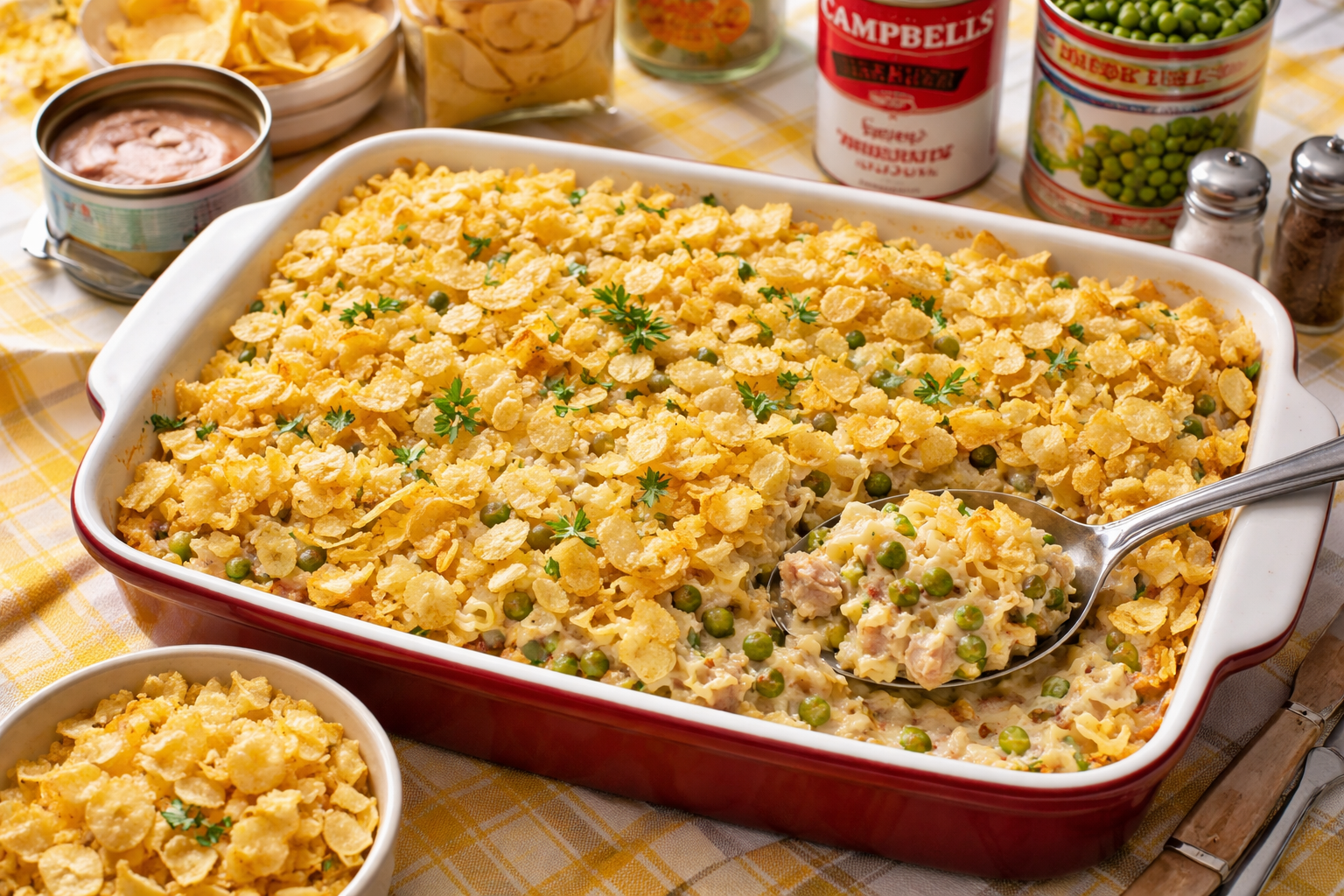
Okay, this one actually survives in some comfort food circles today, but the original version was something else. It relied entirely on canned tuna, canned cream of mushroom soup, and frozen peas for its entire flavor profile. And the signature touch? A thick layer of crushed potato chips on top, because why not. Modern chefs would much rather make their own roux and use fresh fish than reach for shelf-stable ingredients. The sodium content alone is enough to give a dietitian heart palpitations. But for a 1950s family, this was the ultimate Tuesday night dinner—reliable, easy, and somehow exactly what they wanted.